When treating clients with moral injury, using this conceptualisation of moral injury may be a useful resource in helping clinicians understand and potentially explain moral injury:
View paperThis model is illustrated below and highlights the three components of moral injury: predisposing factors, cognitive appraisal patterns, and maintaining factors.
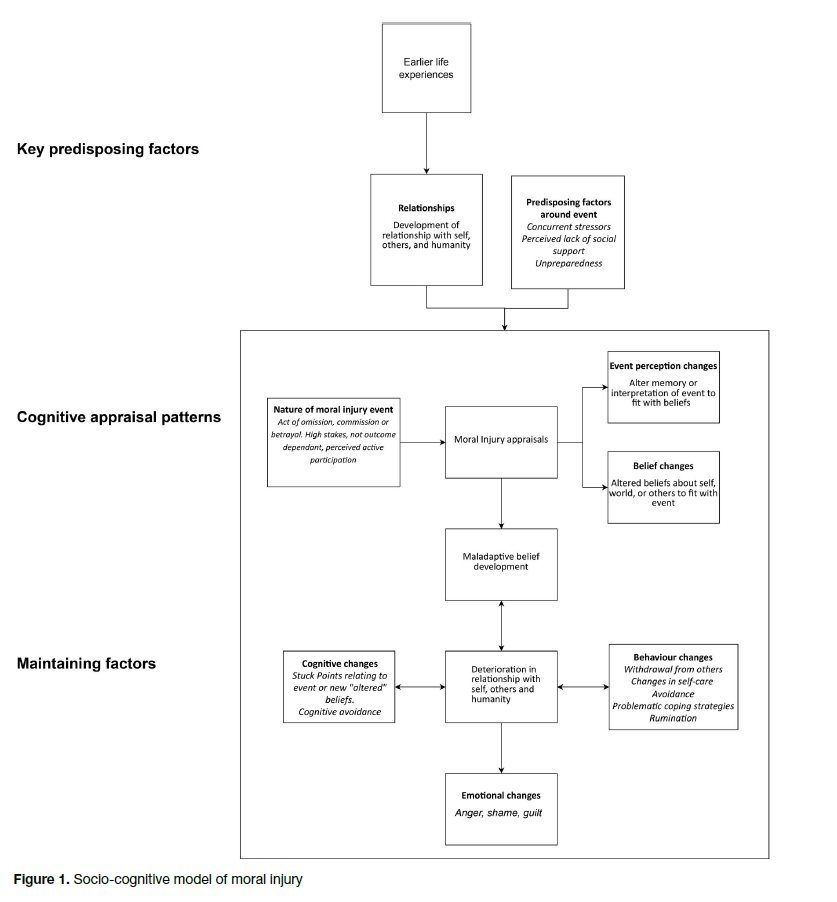
In this socio-cognitive model of moral injury, the authors propose that key to moral injury is the deterioration in one’s relationship with themselves, others, and humanity, leading to global disbelief and behavioural changes. The model above highlights key predisposing factors that may influence the later development or maintenance of moral injury (e.g., adverse childhood experiences). The cognitive appraisal patterns introduce the way individuals interpret potentially morally injurious events based on their existing beliefs, potentially leading to maladaptive appraisals. Finally, maintaining factors refer to the elements that maintain moral injury such as withdrawal from others. This model highlights the complex interplay between individual predispositions, cognitive interpretations, and behavioural responses in the development and maintenance of moral injury.